
The Declaration of Independence: A Wild Ride Through History
We hold these truths to be self-evident that the signing and history of the Declaration of Independence is a wild ride. From when the document was actually signed, to pop culture myths surrounding it, let’s break down some fun facts!
July 2nd? 3rd? 4th??
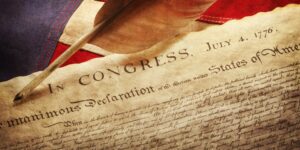
The timeline surrounding America’s decree of independence from Great Britain is a little complicated. The Continental Congress officially declared its independence on July 2nd, 1776. The resolution was approved and it was a unanimous decision across the colonies. John Adams even assumed that July 2nd would go on to become a national holiday. The document itself had been drafted already by Thomas Jefferson, but edits still needed to be made. John Adams, Roger Sherman, Robert R. Livingston, Benjamin Franklin, and Jefferson: known as the Committee of Five, took another two days to agree on the edits, marking July 4th as the official date of adoption. But here’s the thing, the Declaration was adopted on July 4th but it wasn’t actually signed on that day. It wasn’t until early August when most of the members of the Continental Congress signed a copy in Philadelphia. So this is when they decided that July 4th would be recognized as American Independence Day, right? Not quite. When early July of 1777 came around, Congress didn’t realize it had been a year since declaring their independence till July 3rd. They then decided that July 4th seemed to make sense as the day to celebrate independence.
The Signers
The Declaration of Independence was signed by a total of 56 delegates, including two future presidents: Thomas Jefferson and John Adams. The oldest delegate to sign was Benjamin Franklin, 70 years old at the time. On the other end, 26 year old Edward Rutledge was the youngest.
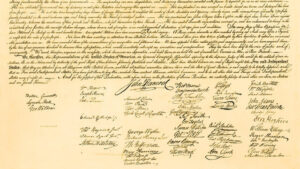 Matthew Thornton of New Hampshire signed the document later than his fellow statesmen, forcing him to sign on the lower right side rather than the top right with the others because of limited space. Only six people signed both the Declaration and the Constitution: Benjamin Franklin, George Read, Roger Sherman, Robert Morris, George Clymer and James Wilson. Nine of the signers actually died before the Revolutionary War concluded, some in strange ways. Button Gwinnett of Georgia died in a duel and Thomas Lynch Jr., drowned in a storm on his way to France.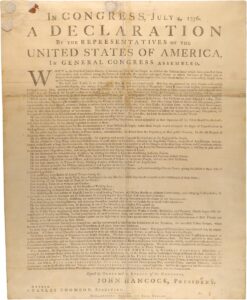
The Dunlap Broadside
After the Declaration was created (but before it was signed), 200 copies were made by printer John Dunlap, referred to as the Dunlap Broadside. The only name included on these broadsides was John Hancock’s. Of those copies, just 26 remain today. One of these copies was actually found at a flea market in Adamstown, Pennsylvania in 1989. The copy was tucked behind an old picture in a frame and only cost the buyer $4. Upon its discovery, it was then sold to a TV producer for $8.1 million.
One copy resides in the University of Virginia library and is rumored to have been stolen from George Washington’s belongings shortly after his death. The copy was traced back to Tobias Lear’s possession, who was Washington’s personal secretary later in life. Lear is known to have removed several documents from Washington’s papers and the broadside could have been among them.
After the broadsides were created John Hancock had several distributed to be read and posted, creating more secondhand copies. The Pennsylvania Evening Post became the first to print the copy, publishing it in their July 6th edition, just one day after Hancock’s distributions.
The Declaration Goes on a Road Trip
For many years after its creation, the Declaration of Independence and other national documents were often being moved around. But in 1924, a special exhibit was created in the Library of Congress to host the Declaration and the Constitution. In 1933, a National Archives building was built and President Franklin Roosevelt pushed for the infamous documents to be transferred there. Disagreements began to take place between the United States Archivist and the Library of Congress. Meanwhile, the Bill of Rights had already been transferred to the National Archives under circumstances that remain somewhat unclear to historians.
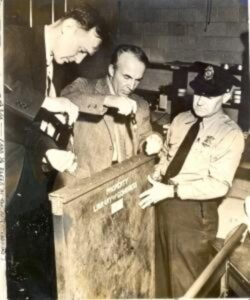
While debates on the fate of the Constitution and Declaration continued, Japanese forces attacked Pearl Harbor, dragging the United States into World War II. Fear and speculation of an attack on the Capital grew, and plans for safeguarding our nation’s founding documents went into action. In late December of 1941, Secret Service agents quietly carried away four cases of important documents to a vault in Fort Knox, Kentucky. What was in these cases you may ask? Included in the packing list was the Gettysburg Address, Lincoln’s Second Inaugural Address, the Articles of Confederation, three volumes of the Gutenberg Bible, a copy of the Magna Carta, and (most importantly) the United States Constitution and the Declaration of Independence. The documents remained hidden away until 1944 when the threat of attack had receded, and they were returned to the Library of Congress.
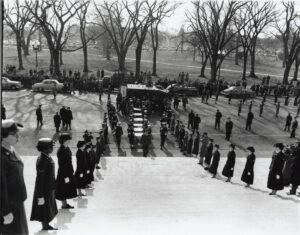
In September of 1951, a grand ceremony marked the reopening of the exhibit for the documents complete with new helium sealed cases for preservation. In his speech, President Truman expressed his desires for the Bill of Rights to also be sealed and placed in the exhibit alongside the Declaration and Constitution. While likely not exactly how Truman expected, all documents were moved to an exhibit together in 1952. In the National Archives Building. Today, the three founding documents of the United States remain on display next to each other in the National Archives.
The National Treasure Myth
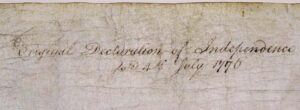
The 2004 movie National Treasure centers around a conspiracy that the back of the Declaration of Independence holds a secret map to ancient treasure. Interestingly enough, there is a message written on the back of the Declaration, but it’s not as exciting as the movie makes it seem. On the back is a label that reads “Original Declaration of Independence dated 4th July 1776”. It’s believed the label was added at some point while the document was in storage, potentially while under the care of Charles Thomson who served as Secretary of the Continental Congress.
Although the Declaration of Independence doesn’t have an official commemorative flag, its legacy lives on through the Stars and Stripes and the many historic banners that tell America’s story. Whether you’re flying an American flag on Independence Day or displaying a Revolutionary War-era design, these symbols help keep our nation’s history alive for future generations. At Gettysburg Flag Works, you’ll find American flags made from premium materials alongside an extensive collection of Revolutionary War, colonial, and patriotic flags to celebrate the ideals first declared on July 4, 1776.